
No hay productos en la cesta.
 Al comprar este producto puedes recolectar hasta
4
puntos.
Su carrito totalizará 4
puntos que se puede convertir en un vale de
0,80 €.
Al comprar este producto puedes recolectar hasta
4
puntos.
Su carrito totalizará 4
puntos que se puede convertir en un vale de
0,80 €.
Edición en inglés.

Pago seguro por tarjeta, transferencia o contrareembolso

Envío gratuito desde 60 euros de compra

Garantía de devolución 15 días
Edición en inglés.
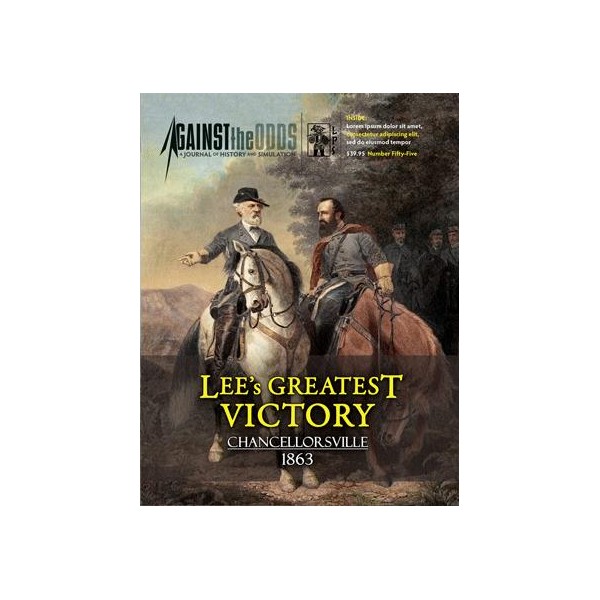
The Chancellorsville campaign, which took place in and around Virginia’s Wilderness in May 1863, is considered by many to be Robert E. Lee’s masterpiece, a true triumph “against the odds.” Opposing Lee was Union commander Joseph “Fighting Joe” Hooker, who had devised a plan that seemed assured of success. His cavalry would raid deep behind Confederate lines, cutting Lee’s supplies, while Hooker and four of his seven infantry corps would march west, then south, and appear behind the Confederate defenses opposite the city of Fredericksburg.
Lee’s Greatest Victory is an area-impulse game but one unlike anything seen before. Since the appearance of the “sunset die roll” nearly three decades ago players have alternated activating a single area, with variation coming in the form of an uncertain turn length. Play has a chess-like feel, with players able to act and react with a great deal of prior calculation. Short turns could be frustrating for one or both players. In this revolutionary development of the genre players no longer know how many impulses they, or their opponent, will have, creating both opportunities and crises that cannot be anticipated in advance—just like real combat. The “momentum” swings back and forth but rarely the same way twice. At the same time, each turn lasts as long as the players wish it to last, ensuring something will happen every turn.
Units of maneuver are Union divisions and Confederate brigades for the most part, with historical leaders present to provide a combat boost though at the risk of being wounded or KIA. Pontoon bridges and entrenchments are part of the basic rules while optional rules incorporate weather and optional units for both sides. Best of all, it's just six turns long and very playable in one sitting.
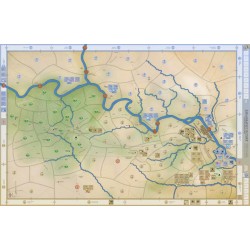
Map - One full color 22"x34" mapsheet
Counters - 176 full color 5/8" die-cut pieces
Rules length - 12 pages
Charts and tables - 2 pages
Complexity - Medium
Playing time - Up to 3 hours
How challenging is it solitaire? - Poor
Edición en inglés.