
No hay productos en la cesta.
 Al comprar este producto puedes recolectar hasta
3
puntos.
Su carrito totalizará 3
puntos que se puede convertir en un vale de
0,60 €.
Al comprar este producto puedes recolectar hasta
3
puntos.
Su carrito totalizará 3
puntos que se puede convertir en un vale de
0,60 €.

Pago seguro por tarjeta, transferencia o contrareembolso

Envío gratuito desde 60 euros de compra
Garantía de devolución 15 días
Edición en inglés
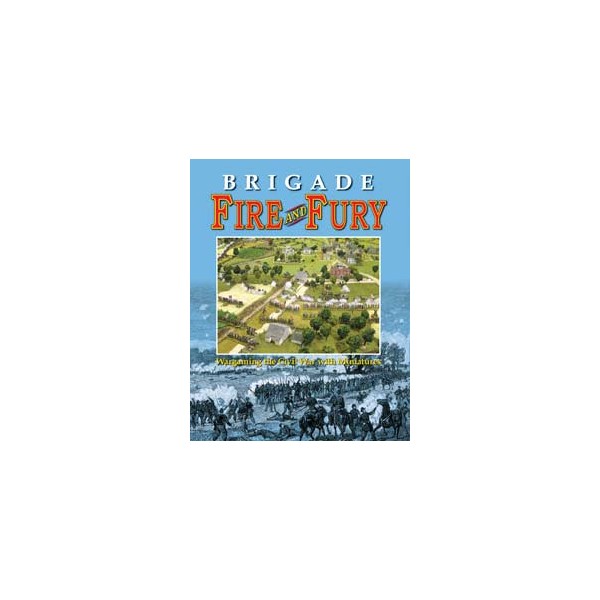
Fire and Fury remains one of the most popular historical military miniatures wargames in the hobby. This second edition provides a fresh look at American Civil War combat. The basic unit is the brigade of infantry or cavalry. The larger scale allows each player to take command of a division or an entire corps and refight the major battles of the war.
For the new player it is an easy game to learn and enjoy. The veteran Fire and Fury gamer will find much that is familiar, like the play sequence, maneuver table, and combat system. Refined game mechanics strike a balance between playability and historical accuracy that draw upon over twenty five years of the Fire and Fury gaming experience.
So why publish a second edition?
First, after a quarter of a century it was time for a facelift. Second, wargaming with historical miniatures is a trip through one's imagination; it is inherently a place for new ideas, creativity, and experimentation. Although wargame rules may seem permanent once they are published, every game played thereafter is a playtest for the next edition rulebook or another scenario book. Fire and Fury has been evolving since the day it was first published.
The most difficult task in any game redesign is deciding what game mechanics to keep and what to change. Fire and Fury remains a popular rules system, so there are loyal wargamers who would say, "If it ain't broke don't fix it," while others who play the newer regimental version or brigadelevel variants might want us to incorporate new ideas to make the original brigade game better. It's a conundrum where either fan base might be alienated by too few or too many changes.
A number of factors made the original rules unique and popular. They were easy to learn, quick and fun to play, and incorporated just the right amount of historical detail. Battles could be fought to a near-historical or at least plausible conclusion. The rulebook format, groundbreaking for its time, had clearly written rules with lots of diagrams and color photographs. We tried our best to remain faithful to these attributes while making a few improvements. We cleaned up or redesigned some 'clunky' game mechanics. We also added just a little more historical detail some players liked from the regimental-level game but still was appropriate at brigade-level. We rewrote the rules, added better organization and more clarity, and redesigned and added more diagrams. We then playtested the rules thoroughly, using historical scenarios as a benchmark. We also included at the back of the book a fictional army generator for playing pick-up games.